The short answer
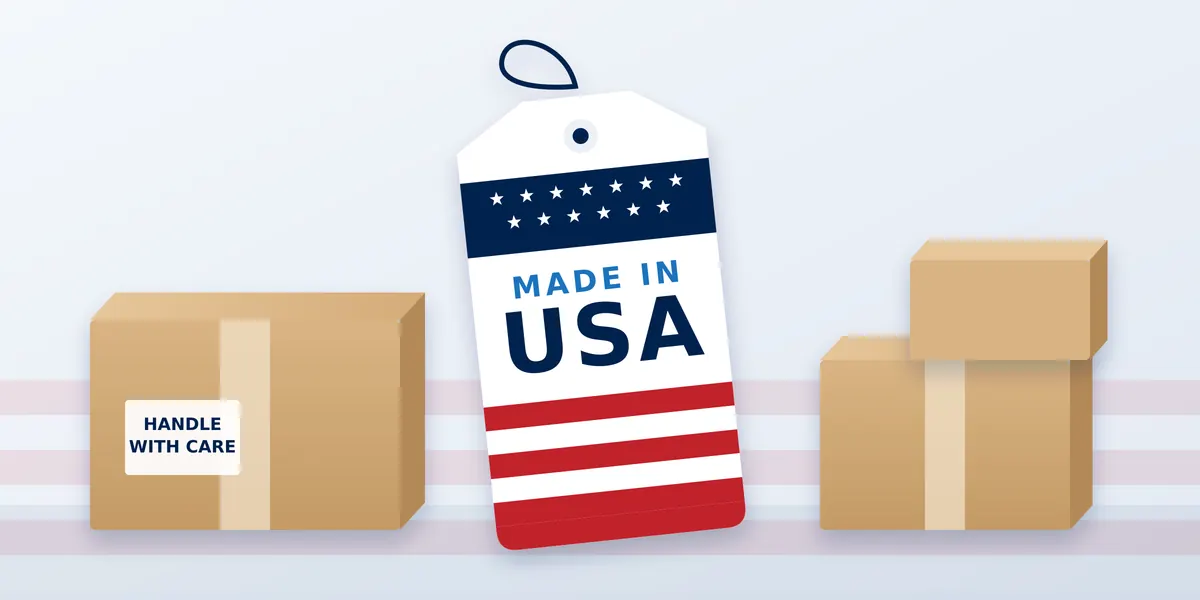
- An unqualified Made in USA claim must meet the FTC standard: the product must be all or virtually all made in the United States.
- All or virtually all means final assembly or processing in the U.S., all significant processing in the U.S., and all or virtually all components made and sourced in the U.S.
- Since August 2021 the Made in USA Labeling Rule, 16 CFR Part 323, lets the FTC seek civil penalties for false unqualified claims on labels, including online and in catalogs.
- Having a U.S. company does not make a product Made in USA. The rule looks at the product, not the seller.
- A qualified claim, with limits or explanations, follows different guidance.
Table of contents
Saying that a product is made in the United States is a marketing advantage, and also a legal claim. For a brand owned from abroad, the risk is assuming that a U.S. company, a U.S. address or a final packaging step is enough. It is not.
This guide explains the FTC standard in plain terms. It is general information, not legal advice: for any real claim, have a lawyer review the product and the label.
The standard: all or virtually all
The FTC has traditionally required that a product advertised as Made in USA be all or virtually all made in the United States. The FTC explains that this means:
- Final assembly or processing of the product happens in the U.S.
- All significant processing that goes into the product happens in the U.S.
- All or virtually all ingredients or components are made and sourced in the U.S.
The Labeling Rule
In August 2021, the FTC finalized the Made in USA Labeling Rule, at 16 CFR Part 323. It codified the all or virtually all standard for labels. Marketers can face civil penalties if they use an unqualified Made in USA label on a product that is not all or virtually all made in the United States, including in catalogs and online.
Unqualified and qualified claims
- An unqualified claim has no conditions: “Made in USA”.
- A qualified claim has limits or explanations, for example about a share of the product or about assembly. The FTC’s guidance covers qualified claims separately: read it before writing one.
What is not enough
- Being a U.S. company or having a U.S. address.
- Final assembly or packaging in the U.S., when the significant processing and the components come from abroad.
- Registering the brand in the United States.
The claim describes the product, not the seller.
Substantiation
A marketer making an unqualified claim must have and rely on a reasonable basis: competent and reliable evidence that the product is all or virtually all made in the U.S. Keep supplier statements, invoices and production records for each component.
Checklist before you use the claim
- Where does the final assembly or processing happen?
- Where does each significant processing step happen?
- Where are the components made and sourced?
- Do you have records to prove each answer?
- Does every place the claim appears, label, website and marketplace listing, say the same thing?
If the answers do not support an unqualified claim, consider a qualified claim reviewed by a lawyer, or no claim.
Related topics
If you import components or finished goods, see our guides on importing into the USA and customs clearance. If you sell online, see sales tax for online sellers.
Frequently asked questions
Can I say Made in USA if my company is a U.S. LLC?
Not for that reason. The claim depends on where the product is made, not on where the seller is based.
What does all or virtually all made in the U.S. mean?
Final assembly or processing in the U.S., all significant processing in the U.S., and all or virtually all components made and sourced in the U.S.
Are there penalties for a false Made in USA label?
Since the Labeling Rule of 2021, the FTC can seek civil penalties for unqualified claims on products that do not meet the standard, including online.
Can I make a qualified claim?
Yes, with limits or explanations. The FTC gives separate guidance on qualified claims.
Does the rule apply to websites and catalogs?
Yes. The FTC notes that penalties can apply to labels, including in catalogs or online.
Sources
First published November 24, 2025. This article is general information, not tax advice for your situation. MyUSAService packages and prices | Book a free call

 Importing Into the USA: Do You Need a U.S. LLC?
 Customs Clearance for U.S. Importers: Steps and Documents
 Sales Tax for Online Sellers: Economic Nexus Explained
 Best State to Form an LLC: Wyoming, Florida or Delaware?