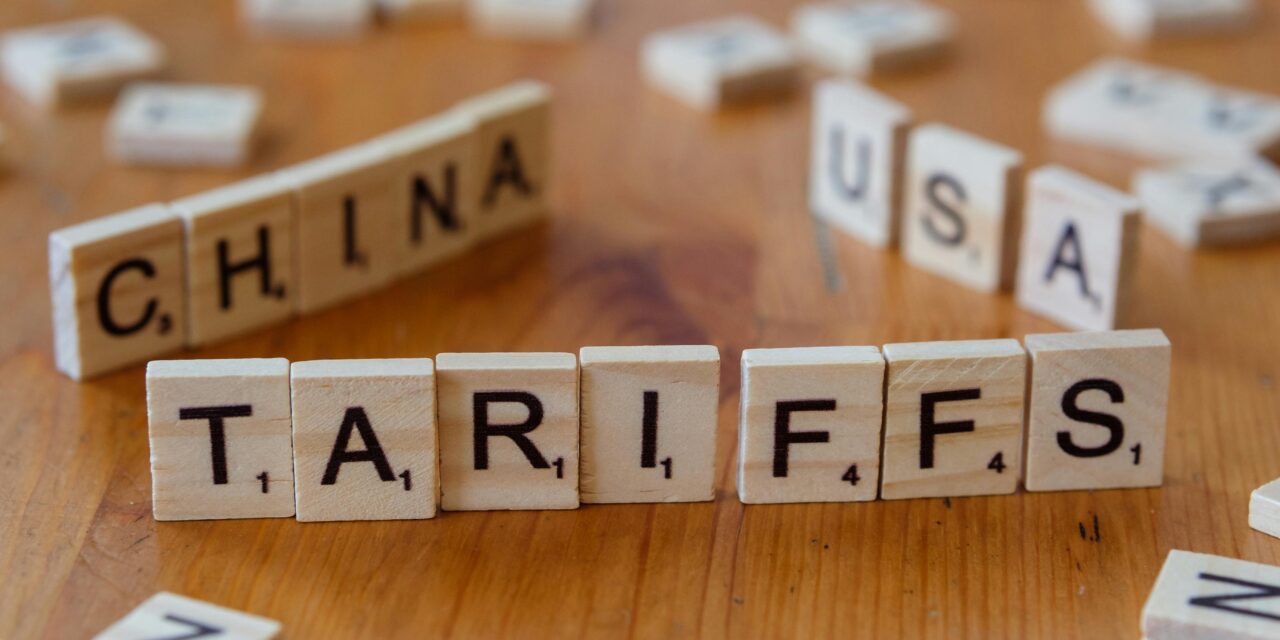
Trade policy uncertainty.
Let’s pause on these three words for a moment. Because if you operate internationally, sell in the United States, import or export goods, or you’re planning to open a U.S. company as a non-resident, this is not theory.
This is real business pressure.
Trade policy uncertainty is the silent variable sitting behind every strategic decision you make. It’s the factor no spreadsheet can fully control, yet it can completely rewrite your margins, timelines, and risk exposure.
And here’s the truth most entrepreneurs learn the hard way:
ignoring uncertainty doesn’t make it disappear, it just makes it more expensive.
What trade policy uncertainty really means for your business
Trade policy uncertainty exists when governments change the rules of international trade without clear timelines or guarantees. Tariffs go up or down. Regulations evolve. Trade agreements are revised, suspended, or replaced.
For a business owner, this translates into:
Unpredictable costs
Unstable supply chains
Difficult long-term planning
You might have contracts signed, inventory ordered, shipping scheduled… and suddenly the numbers don’t work anymore.
Why?
Because trade policy uncertainty turns certainty into assumptions. And assumptions are fragile.
The U.S.–China relationship: A case study in uncertainty
Few examples illustrate trade policy uncertainty better than the evolving relationship between the United States and China.
Over the past decade, trade wars, retaliatory tariffs, and policy reversals have disrupted global supply chains across key industries.
- Electronics
- Manufacturing
- Agriculture
- Consumer goods
Even businesses with no physical presence in China felt the impact, simply because part of their supply chain depended on it.
- Costs increased
- Pricing models had to change
- Margins tightened
And suddenly, founders everywhere were asking the same question:
“How do we plan when policies can change overnight?”
That question has no simple answer, but ignoring it is the worst possible strategy.
Europe, brexit, and regulatory complexity
The European Union remains one of the most important U.S. trading partners. But political shifts and regulatory changes have added another layer of trade policy uncertainty, especially for cross-border operators.
Brexit fundamentally altered trade flows between:
The U.S.
The United Kingdom
The European Union
Now add compliance requirements:
GDPR and data protection laws
Environmental and sustainability standards
Product and consumer regulations
None of these are optional. All of them cost time and money.
For entrepreneurs using the U.S. as an international hub, failing to account for European compliance risks can quietly undermine growth.
Regional trade agreements and shifting global priorities
Global trade is no longer governed by a few stable agreements. Instead, we see a mosaic of regional trade deals constantly reshaping incentives and obligations.
RCEP in Asia-Pacific.
USMCA replacing NAFTA.
Evolving trans-Pacific frameworks.
Each agreement introduces new advantages, and new risks.
This constant reshuffling increases trade policy uncertainty, forcing businesses to reassess:
Where they manufacture
Where they incorporate
How goods move across borders
Flexibility becomes more valuable than scale when policies shift faster than infrastructure.
Political change = Immediate trade risk
Few things impact trade as abruptly as political leadership changes.
A new administration can reverse policies, impose tariffs, renegotiate agreements, or redefine trade priorities within months, or even weeks.
The shift in U.S. trade strategy across administrations over the past years clearly demonstrated how fragile long-term assumptions can be.
And this volatility is global.
Elections in Europe.
Policy realignments in Asia.
Geopolitical tensions worldwide.
Together, they create a persistent state of trade policy uncertainty that businesses must learn to operate within, not wait out.
Tariff volatility and supply chain fragility
One of the most immediate effects of trade policy uncertainty is tariff volatility.
Tariffs are not abstract. They are measurable costs that hit your balance sheet.
A small percentage increase on imported components can:
Eliminate profit margins
Force price increases
Reduce global competitiveness
Businesses relying on multi-country sourcing are especially exposed. A disruption in one region can cascade across the entire supply chain.
And once again, planning becomes reactive instead of strategic.
Technology helps, but strategy wins
Modern businesses use compliance tools, real-time trade monitoring, analytics, and automation to track regulatory changes.
These tools are valuable. Sometimes essential.
But technology does not eliminate trade policy uncertainty.
Only strong structure and informed decision-making do.
Without the right corporate setup, tax planning, and compliance strategy, technology simply reports problems you were already exposed to.
How smart businesses adapt to trade policy uncertainty
The companies that survive, and grow, under constant uncertainty tend to share a few strategic behaviors:
Diversifying supply chains to reduce dependence on a single country
Building resilient U.S. entities, choosing the right state, structure, and tax model
Reducing exposure to tariffs and regulatory shifts through proper international structuring
Working with experienced advisors who understand cross-border complexity
Trade policy uncertainty doesn’t punish ambition.
It punishes poor preparation.
Why MyUSAService exists
MyUSAService was created to solve this exact problem.
We saw skilled entrepreneurs expand into the U.S. without clear strategy.
We saw companies lose money not through bad ideas, but through avoidable structural mistakes.
We saw uncertainty turn into cost because no one explained the rules properly.
With MyUSAService, you don’t just react, you plan.
We help you:
Establish a strong and compliant U.S. presence
Identify where trade policy uncertainty affects your operations
Build structures designed to withstand regulatory and political change
Avoid costly errors that slow growth or expose you to risk
This is not about shortcuts.
It’s about doing things right the first time.
The real question you need to answer
Trade policy uncertainty is not going away. It is becoming the default condition of global business.
The real question is:
Do you want to suffer uncertainty… or manage it?
If the United States is part of your growth strategy, now or in the future, your structure matters more than ever.
Book a consultation with MyUSAService today.
We’ll analyze your situation, identify risks, and help you build a U.S. business foundation designed for clarity, compliance, and long-term resilience.
In international business, preparation isn’t an advantage.
It’s survival.