Why the Word “Warehouses” Changes Everything for Non-U.S. Entrepreneurs.
Let’s slow down for a second and talk about warehouse, because if you’re a non-U.S. entrepreneur looking to enter or scale in the American market, a warehouse is not just four walls and a loading dock. It’s positioning. It’s operational power. It’s what separates brands that occasionally ship to the U.S. from businesses that actually operate inside the U.S. as real players.
If you sell physical products and you’re based outside the United States, sooner or later this question appears, usually right when growth starts getting interesting:
“Should I keep shipping everything internationally… or is there a smarter way to handle U.S. orders?”
The smarter way almost always leads to a U.S.-based warehouse. But not just any setup. Not without the right legal structure behind it.
And this is where most international founders get stuck.
What a U.S. warehouse really Is (And What It Is Not)
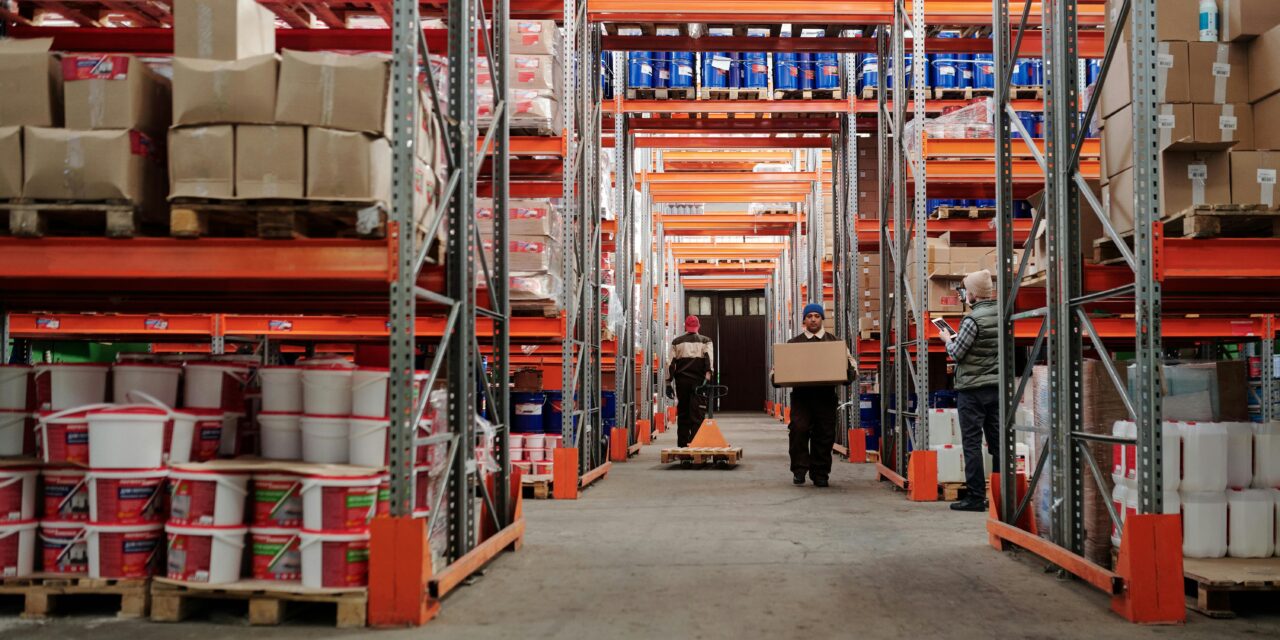
A warehouse in the United States is the physical backbone of your American operations. It’s where inventory lives, where orders are packed, where delivery speed is decided long before a customer clicks “Buy.”
But here’s the part most people don’t think about.
A U.S. warehouse is also a legal and contractual environment.
Warehouse operators are not just storage providers. They’re U.S. businesses with insurance requirements, liability exposure, state regulations, and risk management policies. And because of that, many of them will only work directly with companies that have a U.S. legal presence.
Not because they dislike foreign companies.
Because complexity equals risk.
Without a U.S. entity, foreign businesses often face:
additional legal scrutiny
limited contract options
mandatory intermediaries
higher costs and lower flexibility
Why a U.S. LLC or Corporation unlocks warehouse access
Once you form a U.S. LLC or Corporation, the dynamic changes immediately.
You’re no longer “a foreign company asking for access.”
You’re a U.S. company choosing a warehouse partner.
That single shift removes friction.
With a U.S. entity, you can:
sign warehouse contracts directly
comply with U.S. commercial and state laws
obtain required insurance coverage
integrate fulfillment and logistics software
This is why forming a U.S. LLC or Corporation is not a formality. It’s a gateway.
And it’s often the difference between growth that feels stuck and growth that feels controlled.
Faster shipping, lower costs, stronger supply chains
Let’s talk about logistics, where profits quietly rise or bleed.
Working with a U.S. warehouse allows you to store inventory inside the country. That means you transform your entire fulfillment flow.
Instead of:
International shipment → customs → domestic delivery
You get:
Domestic shipment → customer doorstep
That saves time. That saves money. And more importantly, it creates predictability.
International shipping is slow, expensive, and subject to delays you cannot control. A U.S. warehouse removes customs from daily operations and turns shipping into a repeatable, optimized process.
But again, without a U.S. entity, you rarely get full access to these advantages.
Inventory control that supports growth, not guesswork
Modern U.S. warehouse facilities don’t just store boxes. They operate with advanced inventory management systems that provide:
real-time stock visibility
SKU-level tracking
reorder automation
fulfillment performance analytics
This level of control changes how you manage cash flow and scaling decisions.
But these systems are built to integrate with U.S. entities.
When you operate through a U.S. LLC or Corporation, you can fully access these platforms. No partial visibility. No manual workarounds. No blind spots.
You don’t guess what’s selling.
You know.
And knowing is what allows you to scale without panic.
How U.S. warehouses reduce shipping and fulfillment costs
One of the most underestimated advantages of working with a U.S. warehouse is cost efficiency.
By importing products in bulk and storing them domestically, you reduce:
per-unit shipping costs
customs fees per order
return handling expenses
Domestic shipping is cheaper than international shipping. Period.
And there’s another deal most non-residents don’t expect: U.S.-based companies often receive better carrier rates. Fulfillment networks, couriers, and platforms are designed around domestic businesses.
A U.S. entity combined with reliable warehouses directly lowers your cost of goods sold.
Lower costs mean healthier margins.
Healthier margins mean room to grow.
Scalability: Grow without rebuilding your logistics
Growth exposes weak structures quickly.
A properly chosen U.S. warehouse, paired with a U.S. LLC or Corporation, gives you flexibility. More inventory. New SKUs. Seasonal demand spikes. Expansion into new states.
Warehouses are built to scale, but they scale with businesses they trust.
When your legal structure matches their operating environment, scaling becomes a process, not a disruption.
This matters enormously for:
e-commerce brands
import-based businesses
subscription models
companies testing U.S. market entry
You don’t need perfection on day one.
You need scalability built in.
Customer experience: The silent advantage of U.S. warehouses
From the customer’s perspective, none of this is visible.
They don’t see your entity structure.
They don’t care about customs forms.
They care about speed, reliability, and trust.
A U.S. warehouse allows you to deliver faster, process returns easily, and provide consistent service. Orders feel domestic. Your brand feels established.
And that perception drives:
higher conversion rates
better reviews
stronger brand credibility
Your business feels local, even if the founder is not.
Why MyUSAService exists
Forming a U.S. LLC or Corporation can feel overwhelming if you’re approaching it alone. Different state rules. Federal compliance. IRS requirements. Long-term consequences if done incorrectly.
MyUSAService was created to simplify this exact journey.
We help international entrepreneurs build a solid U.S. business foundation, so working with U.S. warehouses becomes straightforward, compliant, and scalable, not stressful or risky.
We don’t just file documents.
We help you understand how the structure supports your logistics, sales, and long-term expansion.
The right structure first. Everything else follows.
A warehouse is not a technical detail.
It’s a strategic asset.
But it only works when supported by the right legal structure.
If you’re serious about entering or expanding in the U.S. market, forming a U.S. LLC or Corporation is the step that unlocks everything else.
If you want clarity tailored to your business, without unnecessary complexity, book a consultation with MyUSAService.
We’ll help you do it right, from the beginning.